Endoscopic Nasal Surgery | Paranasal Sinuses | Breathe Better and Get Your Quality of Life Back
Many people live for years with constant congestion, difficulty breathing, facial pressure, or recurrent infections without realizing how much it is affecting their daily well-being.
In some cases, medications help temporarily.
In others, there is a structural or functional problem that needs to be treated properly to restore healthy breathing and restful sleep.
At Sinus Center, we help children, families, and adults get their breathing, their sleep, and their quality of life back through an approach based on accurate diagnosis and personalized treatments.
If you are looking into endoscopic nasal surgery because your symptoms keep coming back or because breathing well has become harder and harder, you are in the right place.
Let's look at how to tell when a specialized procedure can help and how the right treatment can transform your daily well-being.
What is endoscopic nasal surgery?
Endoscopic nasal surgery is surgery performed inside the nose using a very small camera with a light. This camera lets the doctor see the inner areas of the nose and the paranasal sinuses more clearly, without making any cuts on the outside of the face. The goal of this procedure is to help you breathe better, reduce congestion, improve sinus drainage, and reduce symptoms such as facial pressure, headaches, or repeated infections. Because it is a less invasive surgery, recovery is usually more comfortable than with traditional surgery.
Why is endoscopic nasal surgery performed?
It is performed when your symptoms continue despite using medications or other treatments.
Put simply, this surgery aims to correct whatever is blocking or inflaming the inside of your nose, so you can breathe better and have less discomfort.
Your doctor may recommend it if you have:
- Frequent sinusitis.
- Nasal polyps.
- Constant nasal congestion.
- Facial pressure or pain.
- Headaches related to the sinuses.
- Persistent nasal discharge.
The goal is for you to feel better, breathe more easily, and have fewer episodes of inflammation or infection.
How do I know if I need endoscopic nasal surgery?
You can often spend months or even years using medications, nasal sprays, or antibiotics, but the symptoms keep coming back. When this happens, it may be a sign that there is something inside your nose or sinuses that needs a more detailed evaluation.
Some questions that can help you tell whether you need to see a specialist are:
- Do your symptoms keep coming back?
- Do medications only help for a while?
- Do you have difficulty breathing through your nose?
- Do you feel pressure in your face or have frequent headaches?
- Do you have nasal congestion almost every day?
- Do you have persistent nasal discharge?
- Do you wake up tired even though you slept enough?
- Do you feel your energy or performance has dropped?
- Have you gotten used to living with constant breathing discomfort?
In many cases, these symptoms may be caused by an obstruction, chronic inflammation, nasal polyps, or another problem that has not been properly identified.
With a specialist exam, we can identify what is causing your symptoms and determine whether you need endoscopic nasal surgery.
I invite you to book an appointment so I can evaluate your case personally and explain the best treatment options for you.
What is the endoscopic nasal surgery procedure like at Sinus Center?
The surgery is performed inside the nose, without making any external cuts on the face. During the procedure, I use a small camera with a light that lets me see in detail the areas that are inflamed, blocked, or abnormal.
Put simply, I work through the nasal passages with special instruments to open up spaces that are closed, remove inflamed tissue or polyps, and improve airflow and sinus drainage.
During surgery:
- You will be under anesthesia so you do not feel any pain.
- No visible incisions are made on the outside of the nose.
- I insert a small camera to guide the procedure.
- I correct the areas that are obstructing your breathing or drainage.
- In some cases, I remove polyps, secretions, or inflamed tissue.
- The goal is to help you breathe better and reduce your symptoms.
When we finish, I'll explain the care you need to follow at home and the approximate recovery time for your case.
How long will it take me to recover from endoscopic nasal surgery?
Recovery can vary depending on your case, the type of problem we treat, and the extent of the surgery. As a rough guide, during the first few days you may feel congestion, pressure in your nose, discharge, or minor discomfort.
Many people can usually return to light activities after a few days, always following medical instructions. Full recovery can take several weeks, since the nose needs time for the swelling to go down and to heal on the inside.
During recovery:
- For the first few days, your nose may feel blocked or under pressure.
- There may be discharge, small crusts, or light bleeding.
- You will be able to gradually return to your normal activities as you progress.
- You will need to avoid strenuous physical activity for about 1 to 2 weeks, or for as long as I recommend.
- I'll explain how to do nasal rinses and what care to follow at home.
- We will have follow-up visits to check your healing and make sure everything is going well.
The most important thing is to follow the instructions after surgery and attend your follow-up appointments. This helps make your recovery more comfortable and leads to better results.
Our process
01 - Comprehensive Clinical Evaluation
We start with a detailed consultation to review your symptoms, medical history, and how the problem has changed over time.
02 - Accurate Diagnosis
We use specialized tools such as nasal endoscopy and imaging studies to see exactly what’s going on and avoid guesswork.
03 - Personalized treatment plan
Every case is different. We design a specific treatment plan that may include medical management, inflammation control, or surgery.
04 - Minimally invasive procedures
When needed, we use advanced endoscopic techniques for greater precision, less trauma, and faster recovery.
05 - Follow-up and monitoring
We guide you through the process to ensure a proper recovery and long-lasting results.

Dr. Carlos Yáñez is a specialist in otolaryngology (ENT) with extensive experience in diagnosing and treating nasal, sinus, and upper airway conditions.
Over a career of more than 30 years, he has helped patients with persistent breathing problems, chronic sinusitis, and nasal disorders get their breathing back, sleep better, and improve their quality of life through accurate diagnoses and personalized treatments.
Many patients come to us after years of living with constant congestion, recurrent infections, or symptoms they have learned to treat as normal without ever identifying the cause of the problem.
In some cases, people adapt to fatigue, facial pressure, or difficulty breathing, thinking these are normal discomforts or just part of their daily life.
At Sinus Center, we practice thorough, precise, and well-executed medicine to identify the source of the problem and offer more effective, longer-lasting solutions for our patients' respiratory health.
How can I prepare for endoscopic nasal surgery?
Before surgery, I'll explain everything you need to know so you can go into the procedure feeling calmer and more confident.
Preparation may vary depending on your case, but in general it is important that you follow these instructions:
- Come to your pre-surgery evaluation so we can review your case and answer your questions.
- Let me know if you take any medications, supplements, or blood thinners.
- Tell me if you have any allergies or significant medical conditions.
- Do not stop or change any medication without medical guidance.
- Follow the fasting instructions before surgery.
- Avoid smoking, since it can affect healing.
- Arrange for someone to come with you on the day of the procedure.
- Have what you need for your recovery ready at home, such as nasal rinses and the prescribed medications.
- Follow all the recommendations I'll give you before surgery.
It is also important to arrive early on the day of the procedure and to ask me any questions you have before going into surgery. The goal is for you to know what to expect and to feel supported throughout the entire process.
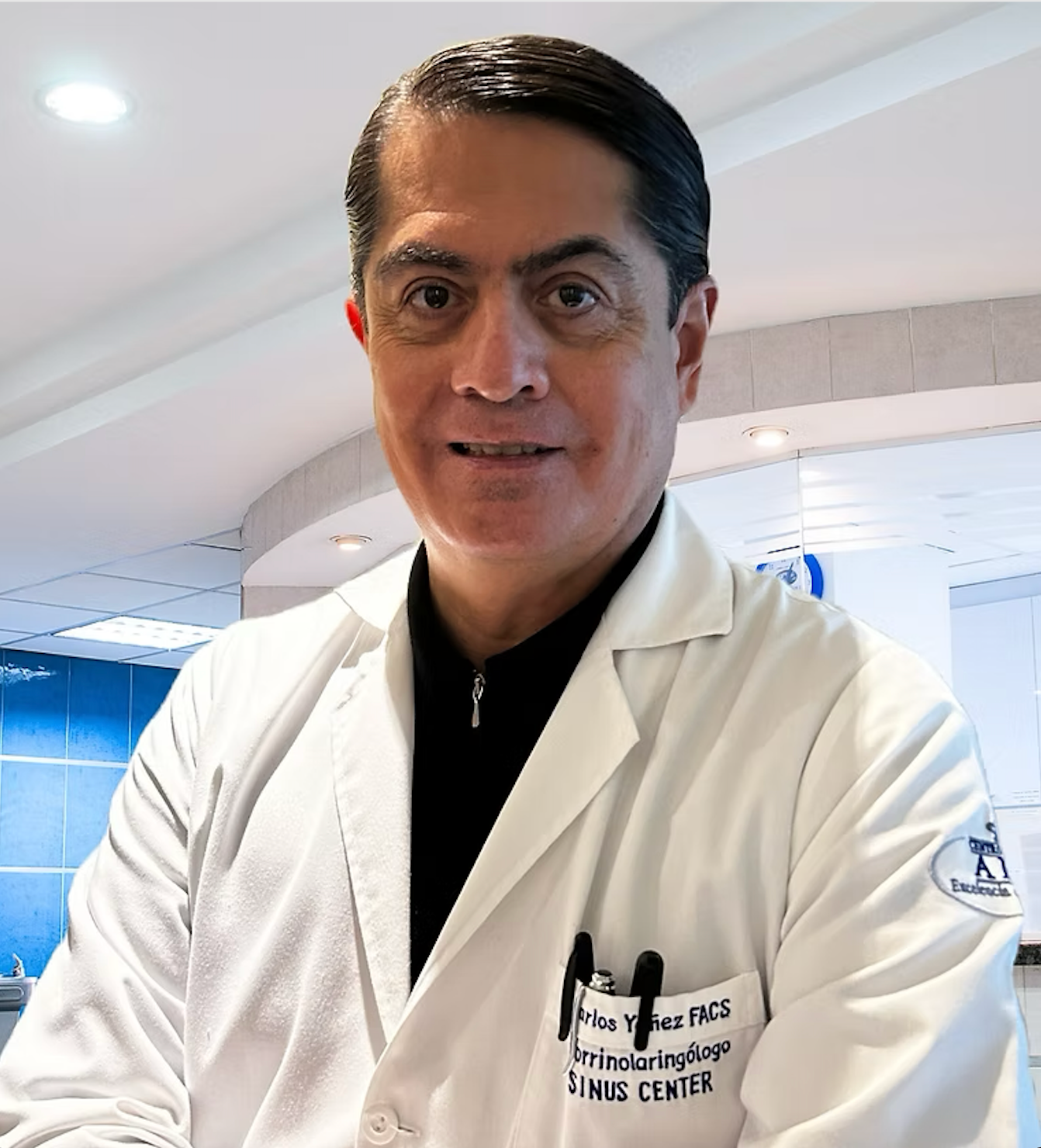
I am Dr. Carlos Yáñez
Otolaryngologist with over three decades of clinical and surgical experience

Here's how we can help:
Every case is different, which is why everything starts with a specialist evaluation. Based on an accurate diagnosis, we determine the treatment or procedure that’s right for you. Book a consultation or request more information to take the first step with confidence.
Frequently asked questions
Does it leave scars?
It does not leave visible scars, because the surgery is performed inside the nose. No external cuts are made on the face.
Is recovery very painful?
Recovery is generally not very painful. Most commonly, you will feel congestion, nasal pressure, discharge, crusting, or discomfort during the first few days.
I'll prescribe medications, nasal rinses, and specific care so your recovery is more comfortable.
Will I need to stay in the hospital?
In most cases, you can go home the same day as the surgery.
However, this may change depending on your case, the extent of the procedure, your medical history, and how you progress after surgery.
What are the main risks?
To be honest, the main risks are:
- Bleeding.
- Infection.
- Symptoms that persist or come back.
- Internal scarring that may require follow-up.
- Injury to nearby structures, although this is uncommon.
It is important to know that no procedure is risk-free. Even so, my job is to explain everything to you honestly, review your case carefully, and take the necessary steps to make the surgery as safe as possible.
Can endoscopic nasal surgery help me breathe better and sleep better?
Yes. When breathing improves and the sinuses work properly, many people experience better sleep quality, more energy, and better daily well-being.